Market Overview
N2O-Eaters lies in an emerging field with few existing solutions. There are other labs working to reduce N2O emissions, however, we offer significant advantages.
CURRENT TECHNOLOGY COMPARISON
| Technology | Low Frequency | Minimal Environmental Pollution | Controlled Propagation | Ease of Application | Details |
|---|---|---|---|---|---|
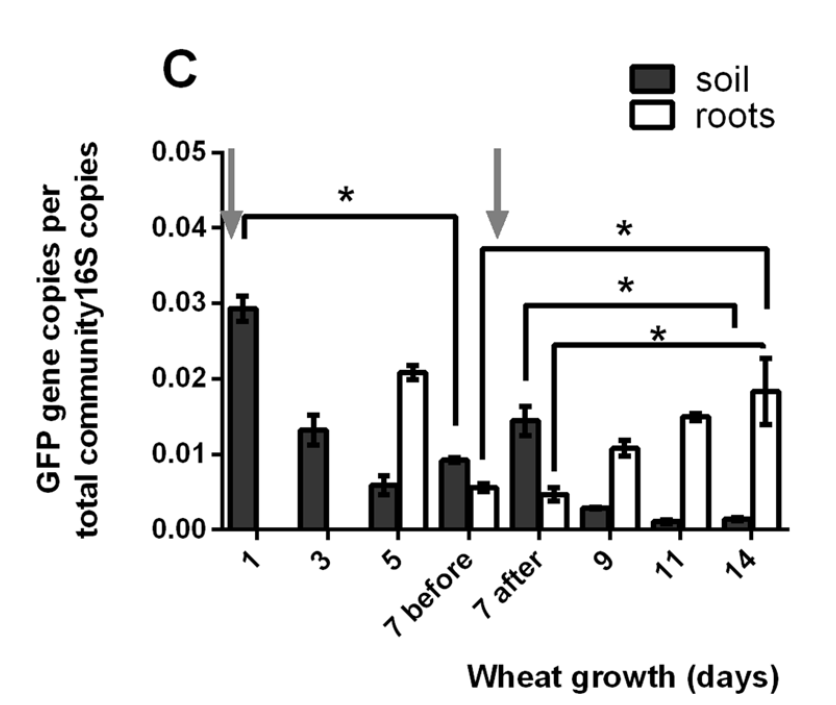
| Wheat root inoculation with denitrifying bacteria | ❌ | ✅ | ❌ | ❌ | Temporary, short-term bioaugmentation |
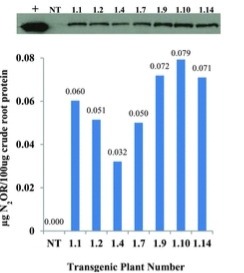
| Transgenic expression of nosZ in tobacco plant roots | ✅ | ✅ | ❌ | ❌ | Requires engineering each crop breed prior to seeding |
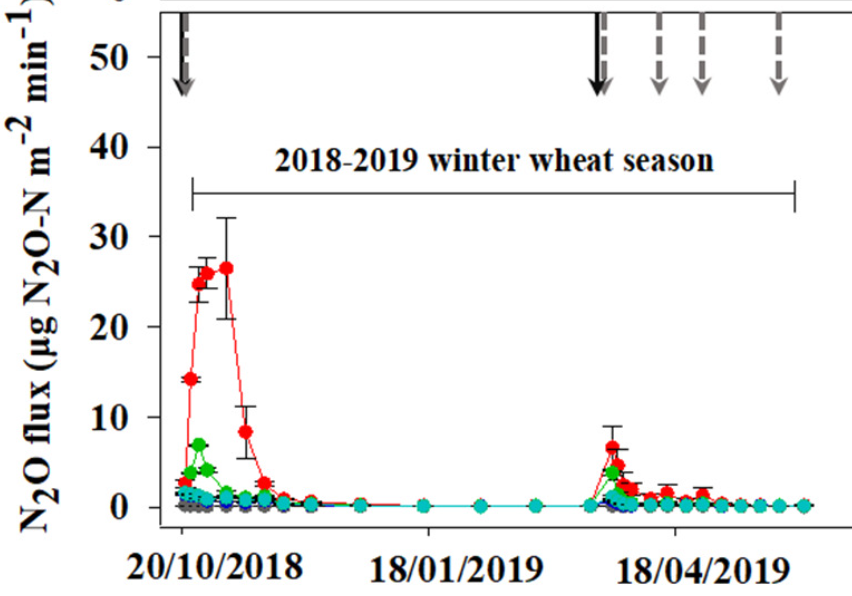
| Fertilizer additives | ❌ | ❌ | ❌ | ❌ | Soil leaching |
| N2O-Eaters | ✅ | ✅ | ✅ | ✅ | Simple, stable gene fortification |
Other solutions, such as innoculating wheat with denitrifying bacteria requires frequent reinoculation, since the bacteria used
are not native to the system. N2O reducing fertilizer additives risk environmental pollution and GMO crops risk gene flow that can
create hybrid offspring.
Our system modifies native soil bacteria, which increases its persistence, ultimately decreasing the frequency of reinoculation.
N2O Eaters is also the only one with a propagation control mechanism to minimize the risk of gene flow. Most importantly, our system
is extremely easy to use: simply add it to the soil during tilling.
Selected technological comparisons:
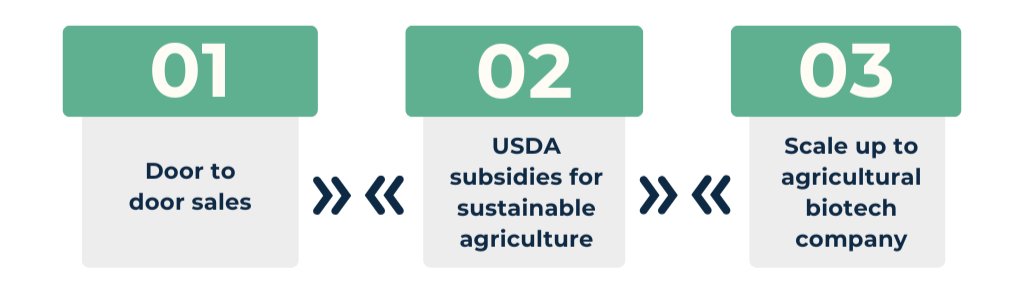
GO-TO-MARKET STRATEGY
MARKET GROWTH
The Environmental Protection Agency calculates the social cost of nitrous oxide is estimated to be
$40 million USD
& in coming years that is expected to go up to
$45 million
USD

The Agricultural Biotech Industry is currently valued at

$151 billion
USD
and will increase in coming years